1. Strategic & Political Motives
From the Manhattan Project through the Cold War, the U.S. government prioritized nuclear superiority as a deterrent. This required a vast, nationwide industrial network of secret cities, refining plants, and remote testing grounds. For the bulk of mainland atmospheric testing, the Nevada Test Site (NTS) was chosen for its proximity to national labs, significantly reducing logistics compared to Pacific testing.
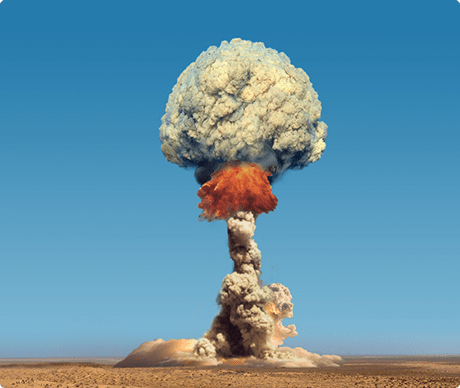
2. The Precedent: Trinity Site, New Mexico (1945)
Before the establishment of the Nevada Test Site, the world’s first nuclear weapon was detonated on July 16, 1945, at the Trinity site in the Jornada del Muerto desert of south-central New Mexico. Conducted as part of the Manhattan Project, this test was the very first to expose an unknowing civilian population to radioactive fallout.
The July 1945 detonation (code-named "Gadget") was the only nuclear weapon ever tested at the Trinity site. Realizing the location lacked the infrastructure for a sustained continental testing program, the U.S. government established the Nevada Test Site in 1951. While Trinity was the sole atmospheric test in New Mexico, the state did host two much later underground detonations—Project Gnome (1961) and Project Gasbuggy (1967)—which were conducted to explore "peaceful" industrial uses for nuclear explosives.
3. Major Operations and Their Impacts
| Operation | Year(s) | Notable Characteristics |
|---|---|---|
| Oak Ridge ("Secret City") | 1942–1945 | Housed the K-25 and Y-12 complexes for uranium enrichment and X-10 for plutonium research. |
| Mallinckrodt Chemical Works | 1942–1957 | Processed the majority of uranium for the first atomic bombs; waste eventually contaminated Coldwater Creek. |
| Gadget | 1945 | First detonation (NM); severe local fallout; now included in expanded RECA. |
| Ranger | 1951 | Established the mainland testing precedent at NTS. |
| Paducah Gaseous Diffusion Plant | 1952+ | Served as a critical "feed facility" for the nation's nuclear weapons program. |
| Teapot | 1955 | Tested "Survival City" to evaluate infrastructure durability. |
| Weldon Spring Site | 1957–1966 | Processed uranium ore for the AEC; generated 1.5 million cubic yards of radiotoxic waste. |
| Plumbbob | 1957 | Largest atmospheric test series; massive Radioiodine (I-131) release. |
| Hardtack II | 1958 | "Midnight Shots" rushed before the moratorium deadline. |
| Dominic I | 1962 | July–Nov 6: Final Pacific atmospheric series. |
| Dominic II (Sunbeam) | 1962 | July 7–17: Final mainland rush of atmospheric series at NTS. |
| Long Shot | 1965 | First of three underground tests on Amchitka Island, AK. |
| Milrow | 1969 | Second underground test on Amchitka Island; measured seismic reaction. |
| Cannikin | 1971 | Final/largest underground test on Amchitka Island (5-megaton blast). |
| West Lake Landfill Dumping | 1973 | Radioactive waste from early refining operations was illegally dumped here, causing chronic exposure. |
The Department of Justice established an alternative eligibility "carve-out" for presence in affected areas from June 30 – July 31, 1962. This window was specifically created due to the intense atmospheric fallout generated by Operation Dominic II (Sunbeam), which concluded the final mainland atmospheric tests on July 17, 1962.
The "Extended Exposure" Legal Argument: While the carve-out is limited to July, U.S. atmospheric testing did not officially cease until the conclusion of Operation Dominic I on November 6, 1962[9]. Because these later Pacific tests also contributed to global atmospheric fallout, legal experts are arguing that claimants present in affected areas throughout the summer and autumn of 1962 were subject to continuous exposure risks. This argument is a critical pathway for qualifying individuals who miss the narrow July carve-out window.
4. Atmospheric Testing: The Race Against the Clock: 1957–1963
The timeline of NTS atmospheric testing was dictated less by scientific necessity and more by the closing windows of international diplomacy between the USA and USSR. By the late 1950s, the world was waking up to an invisible threat: Global Fallout. Unlike the immediate blast of a bomb, radioactive debris was circling the globe and falling with the rain thousands of miles away.
The Catalyst: Strontium-90 and the "Baby Tooth Survey"
The primary driver for a testing moratorium between the USA and USSR wasn't just diplomacy—it was biology. Scientists discovered that Strontium-90 mimics calcium; the body was absorbing it from soil into grass, then into cows, and finally into the bones and teeth of children.
- The Public Outcry: When the "Baby Tooth Survey"[1] showed that children born in the 1950s had high levels of radiation in their teeth, the "Low Population" myth collapsed. Parents everywhere realized their children were "downwinders."
- Scientific Findings: Initiated in December 1958 by the Greater St. Louis Citizen's Committee for Nuclear Information (CNI) and analyzed by the Washington University School of Dentistry, the survey ultimately collected nearly 300,000 teeth. It proved a 100-fold rise in radioactive Strontium-90 in children born between 1945 and 1965.
- The 1958 "Moratorium": A voluntary moratorium on all forms of testing was agreed upon starting in the fall of 1958, initiated first by the Soviet Union and adhered to by USA President Eisenhower and Great Britain[7].
The Plumbbob "Sprint" (1957)
Anticipating the ban, scientists conducted 29 detonations in four months[2]. The compressed schedule gave the environment no time to clear, maximizing cumulative exposure.
The Hardtack II Rush (1958)
With a deadline for the "1958 Moratorium" of midnight, Oct 31, the NTS saw a frantic pace[3]. Testing occurred in poor weather conditions just to beat the clock, pushing fallout into unplanned areas.
Why the Moratorium Failed (1961)
The moratorium lasted nearly three years, but it was fragile. In September 1961, the Soviet Union broke the silence by detonating the "Tsar Bomba."
The U.S. responded with Operation Dominic II in 1962, creating the high-intensity residency period (June–July 1962) recognized by RECA today[4].
The Legacy for Downwinders
5. Why is 1962 the "Turning Point"?
While the voluntary halt had failed, 1962 served as the final threshold for atmospheric testing. The Limited Test Ban Treaty (LTBT) [8]was eventually signed on August 5, 1963, following the geopolitical shock of the Cuban Missile Crisis.
- The Failed Negotiations: Throughout 1962, the U.S. and UK deadlocked with the Soviets over "on-site inspections" for a total ban, eventually settling for a partial ban that excluded underground tests.
- The Antarctic Treaty: By 1962, this treaty had successfully maintained Antarctica as a nuclear-free zone, serving as a "proof of concept" that nuclear diplomacy could work.
6. The Hidden Legacy: Manhattan Project Waste and Remote Testing
While early RECA legislation focused heavily on atmospheric fallout and uranium miners, the 2025 RECA Expansion introduced historic compensation pathways for individuals exposed to radioactive materials outside of traditional continental testing. This officially broadened the scope of the program to include victims of Manhattan Project-era nuclear waste and remote underground test sites.
Chronic Exposure vs. Acute Fallout
The creation of the world's first atomic weapons required a vast industrial network. Long after the bombs were built, the radioactive byproducts of uranium refining and plutonium production were often improperly stored or disposed of. Instead of a single cloud of atmospheric fallout, communities near these sites faced chronic exposure as invisible toxins slowly leeched into their soil, creeks, and groundwater over decades.
Newly Covered Regions and Their Operations
The 2025 legislation established crucial provisions for communities affected by historic Manhattan Project waste sites and remote testing grounds. The creation and testing of the early nuclear arsenal required highly specialized facilities across the country, each leaving behind a distinct environmental footprint:
- Missouri (St. Louis Area): Starting in the 1940s, the Mallinckrodt Chemical Works in downtown St. Louis processed the majority of the uranium needed to build the very first atomic bombs. The radioactive waste from this refining process was trucked to unprotected sites near the St. Louis Airport (SLAPS) and Latty Avenue. Over the decades, these improperly stored materials washed into nearby Coldwater Creek and were eventually dumped in the West Lake Landfill, causing chronic exposure to surrounding suburban communities.
- Tennessee (Oak Ridge): Established as a secret city for the Manhattan Project, Oak Ridge housed massive industrial complexes—like the K-25 and Y-12 plants—built to enrich uranium, as well as the X-10 site for plutonium production research. The rapid, wartime pace of these operations generated substantial quantities of low-level solid and liquid radioactive wastes. Over time, these toxic byproducts contaminated local waterways, such as the East Fork Poplar Creek, and surrounding soils.
- Kentucky (Paducah): Built shortly after the Manhattan Project in 1952, the Paducah Gaseous Diffusion Plant served as a critical "feed facility" for the nation's nuclear weapons program. As the only low-grade uranium enrichment facility in the U.S. at the time, it produced enriched uranium for military reactors and later commercial power. The decades of heavy industrial processing at the site resulted in severe groundwater contamination, notably from toxic solvents and radioactive materials, impacting the surrounding area.
- Alaska (Amchitka Island): Between 1965 and 1971, the U.S. government conducted three massive underground nuclear tests—Long Shot, Milrow, and Cannikin—deep beneath Amchitka Island. The Milrow test was a calibration test designed to measure seismic reactions, while Cannikin was a 5-megaton blast. The 2025 RECA expansion specifically covers the highly limited ZIP codes of 99546 and 99547 to compensate individuals who lived or worked in these remote Aleutian areas and were exposed to lingering radioactive materials from the tests.
The Catalyst: Community Activism and Legislative Revival
Much like the "Baby Tooth Survey" that woke the nation to atmospheric fallout, the inclusion of Manhattan Project waste sites was driven by mounting public pressure and new health data. For decades, the federal government had not fully acknowledged the long-term impacts of its earliest nuclear production facilities.
- The Coldwater Creek Crisis: [5] The breaking point occurred in the suburbs of St. Louis. Residents began realizing the connection between their illnesses and the historical disposal of nuclear waste during the Manhattan Project era. This prompted intense community organizing and brought national attention to the improperly handled waste at Coldwater Creek and the West Lake Landfill[6].
- The Expiration and Revival (2024–2025): The original RECA program expired in June 2024 after initial efforts to expand it failed in the U.S. House. This expiration galvanized a coalition led by lawmakers like Missouri Senator Josh Hawley and Navajo Nation President Buu Nygren, who fought to revive the program and expand it to include these long-forgotten waste sites and post-1971 uranium miners.
- The 2025 Reauthorization: The massive RECA expansion was officially revived and signed into law in July 2025. This legislation provided long-overdue justice, marking the first time the U.S. government publicly acknowledged and compensated individuals for its role in exposing St. Louis residents and other communities to nuclear waste.
7. The Next Frontier: The 2026 Expansion Efforts
While previous legislation made historic strides, significant gaps remained. Lawmakers are currently advancing the Radiation Exposure Reauthorization Act of 2026 to correct ongoing historical injustices by reflecting the true, global footprint of the U.S. nuclear weapons program.
Guam and the Pacific Testing Fallout
Despite being home to U.S. citizens, the territory of Guam has historically been excluded from RECA. Federal and declassified reports confirm that Guam was exposed to radioactive fallout from 67 atmospheric nuclear tests conducted in the Pacific—specifically the Marshall Islands—between 1946 and 1962. The 2026 legislation seeks to officially designate Guam as a downwinder area, providing long-overdue recognition to residents whose health was impacted by these distant detonations.
Montana and the Reach of Atmospheric Radiation
The new bill also highlights how far nuclear fallout can travel across the continental United States. It aims to expand geographic eligibility to include individuals in states like Montana, which recorded some of the highest concentrations of radiation in the country stemming from nuclear weapons experimentation in the 1950s and 1960s. Other historically overlooked states like Colorado are also being pushed for full inclusion.
The Forgotten Atomic Cleanup Veterans
Beyond atmospheric testing and Manhattan Project waste, the 2026 legislation addresses the veterans tasked with the dangerous job of nuclear remediation. The bill proposes extending eligibility to military crews involved in cleanup operations at:
- Enewetak Atoll: Remediation of the Pacific proving grounds in the Marshall Islands.
- Palomares, Spain: Cleanup following an accidental mid-air collision that dropped hydrogen bombs over the town in 1966.
- Thule, Greenland: Remediation after a 1968 crash of a nuclear-armed B-52 bomber.
8. References & Citations
- The Baby Tooth Survey: Detailed historical archives, research methodology, and findings regarding the Washington University School of Dentistry analysis and the Greater St. Louis Citizen's Committee for Nuclear Information (CNI). Washington University in St. Louis Legacy Exhibits.
- Operation Plumbbob: Overview and data concerning the 1957 nuclear test series. U.S. Nuclear Regulatory Commission (NRC) Document ML12334A808.
- Operation Hardtack II: Historical report on the 1958 atmospheric nuclear weapons tests. Defense Threat Reduction Agency (DTRA) Report DNA 6026F.
- Operation Dominic II (Sunbeam): Historical report on the 1962 atmospheric nuclear weapons tests. Defense Threat Reduction Agency (DTRA) Report DNA 6027F.
- The Coldwater Creek Public Health Assessment: Official evaluation confirming the health impacts and increased cancer risks associated with Manhattan Project radiological waste in the St. Louis area. Agency for Toxic Substances and Disease Registry (ATSDR) Public Health Assessment.
- West Lake Landfill Health Consultation: Official evaluation regarding potential exposures to radioactive waste stored at the site. Agency for Toxic Substances and Disease Registry (ATSDR) Health Consultation (2015).
- The 1958 Nuclear Test Moratorium: Historical technical report detailing the origins, duration, and eventual collapse of the voluntary testing pause between the superpowers. U.S. Department of Energy, Office of Scientific and Technical Information (OSTI).
- The Limited Test Ban Treaty: Historical overview of the initial testing pause between the superpowers and the subsequent Limited Test Ban Treaty negotiations. U.S. Department of State, Office of the Historian.
- Operation Dominic I: Official Department of Energy historical record of all United States nuclear tests, confirming the timeline and conclusion of the 1962 Pacific atmospheric test series. U.S. Department of Energy (OSTI): United States Nuclear Tests 1945–1992.